When Club Standards Apply Before the Legal Process Is Finished
Five Sydney players suspended after club standards breach
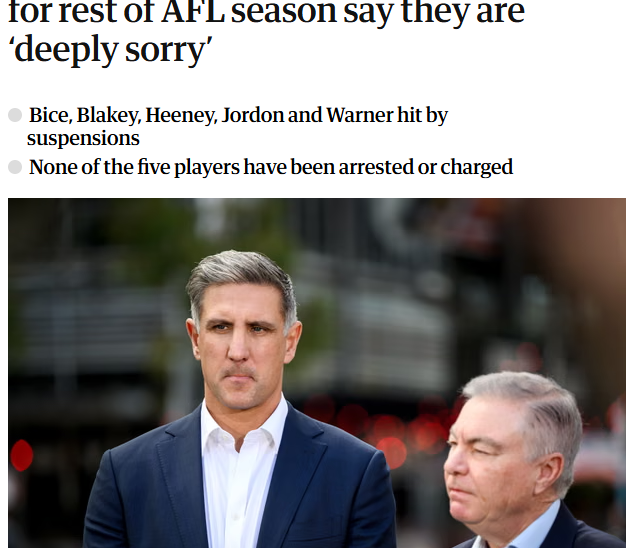
On 19 August 2026, Jack Snape, writing for The Guardian, reported that Sydney Swans players Riley Bice, Nick Blakey, Isaac Heeney, James Jordon and Chad Warner had been suspended for the remainder of the AFL season.
Importantly, Snape distinguished between two separate matters.
Victoria Police was investigating an alleged sexual assault at the Melbourne hotel where the team had been staying. At the time of publication, none of the five players had been arrested or charged.
Separately, the Sydney Swans took disciplinary action based on the players’ conduct and the club’s own standards. Chief executive Matthew Pavlich said the conduct involved staying out late, drinking and bringing women back to the hotel. The club considered those decisions well below the standards expected of its players.
That distinction matters.
Professional sporting organisations do not necessarily have to wait for a criminal proceeding before dealing with behaviour that breaches their own codes, employment expectations or team standards. At the same time, clubs must be extremely careful not to confuse an internal disciplinary finding with allegations being examined by police.
From an off-field risk perspective, the article also illustrates how quickly the environment changes once a team moves from the controlled structure of a match into post-match socialising, alcohol, late-night activity and a team hotel.
What begins as downtime can very quickly become a governance issue for an entire organisation.
Source: Jack Snape, Five Sydney Swans players suspended for rest of AFL season say they are ‘deeply sorry’, The Guardian, 19 August 2026.
Read the original Guardian article